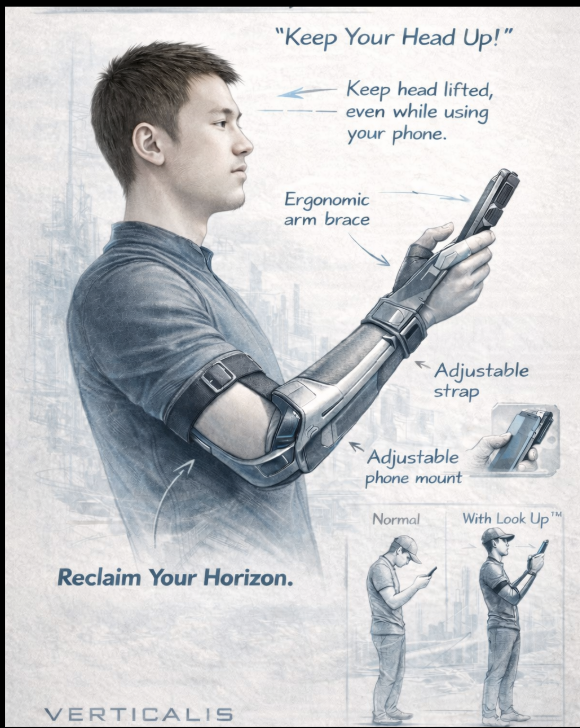
an ergonomic brace — branded verticalis — that holds your phone in your sightline so you never look down. a chindōgu that asks how far we'll go to keep scrolling. "reclaim your horizon."
explore the rig
turn it over. it's as ridiculous as it sounds.
a 3d study of the verticalis brace — ergonomic forearm shell, adjustable straps, phone mount + shoulder sling
the premise
what if you never had to look up at all?
Look Up is a chindōgu — a Japanese tradition of inventions that are technically functional but socially absurd.
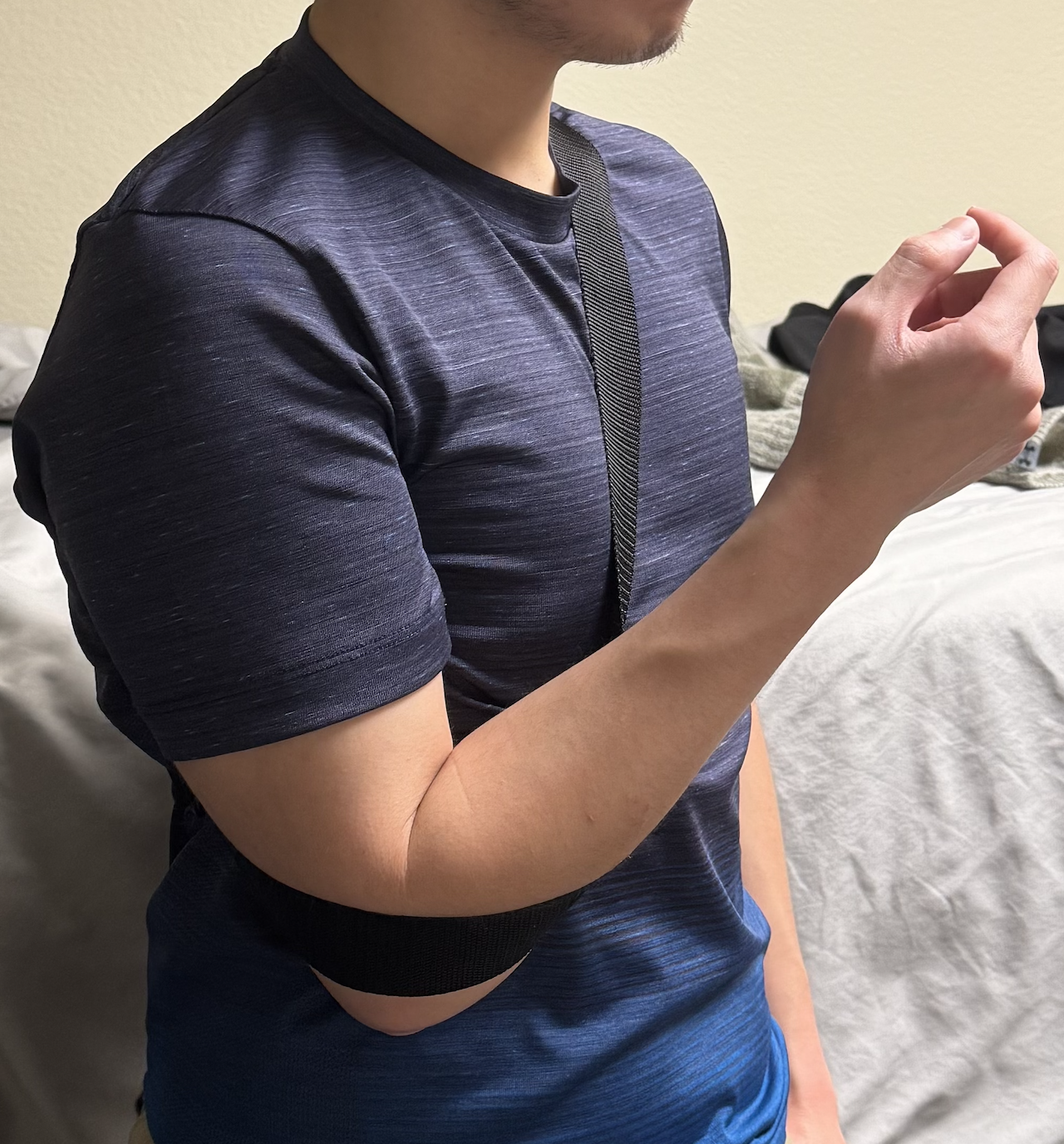
The brace locks your forearm in a fixed, raised position and mounts your phone right in your forward sightline. A shoulder strap takes the weight. You get to keep scrolling while you walk — without ever tilting your head down. It "solves" walking-while-distracted by perfecting the distraction.
the critique
make the habit external, and it stops looking normal.
Phone addiction is invisible because it's so ordinary — everyone's head is already down. By moving the habit out of the body and onto it — strapped, rigid, awkward — the absurdity becomes impossible to ignore.
The device asks one quiet question: we'll engineer an elaborate contraption to keep scrolling safely… so why not just stop? The lengths are the point.
"we'd rather wear the problem than break the habit."
selling the joke
we packaged it like a real product.
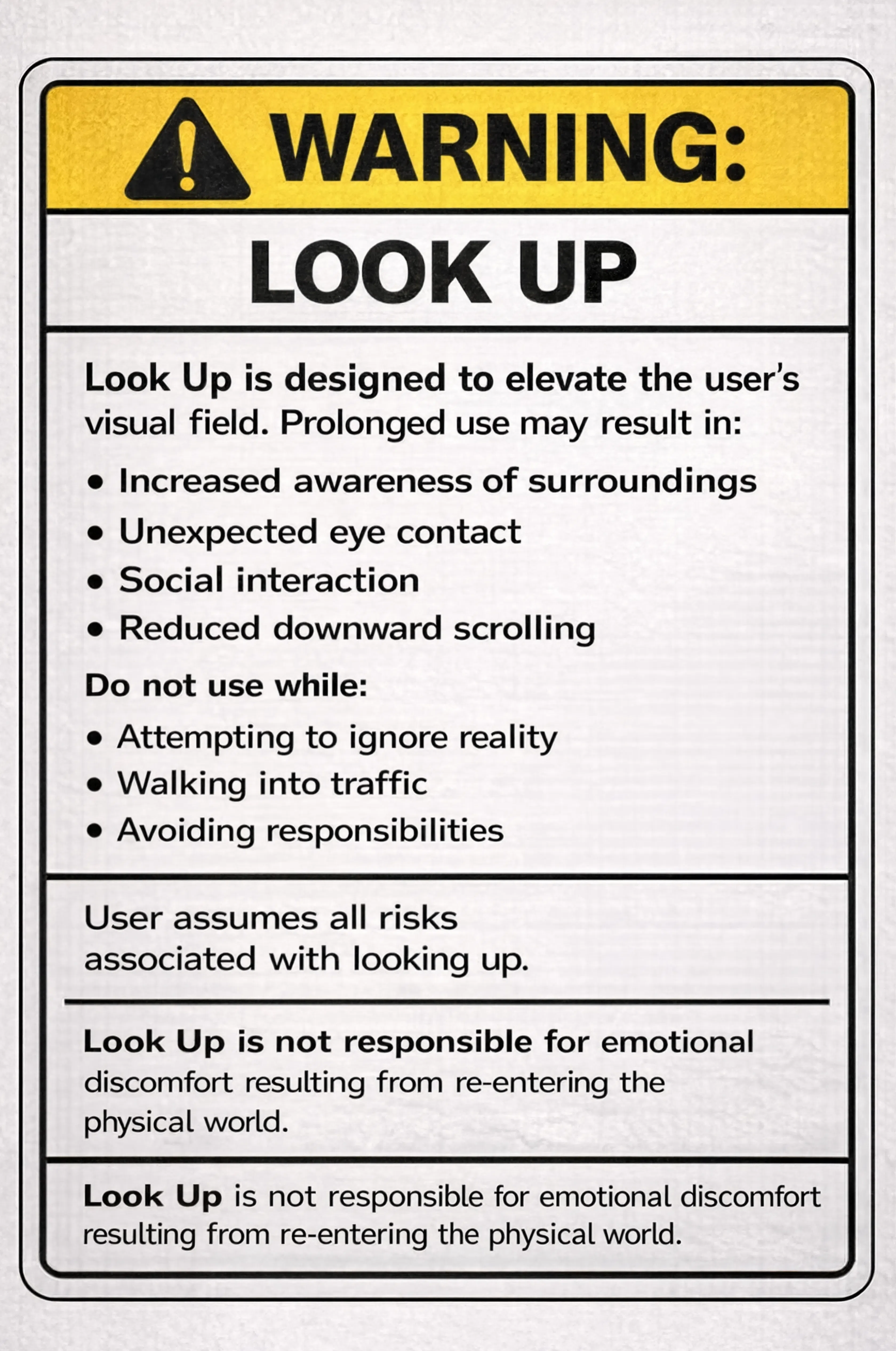
To push the satire all the way, we art-directed Look Up as a straight-faced consumer brand — Verticalis — with a glossy ergonomic ad and a deadpan safety label. The more sincere the packaging, the sharper the critique.
the prototype
built rough, on purpose.
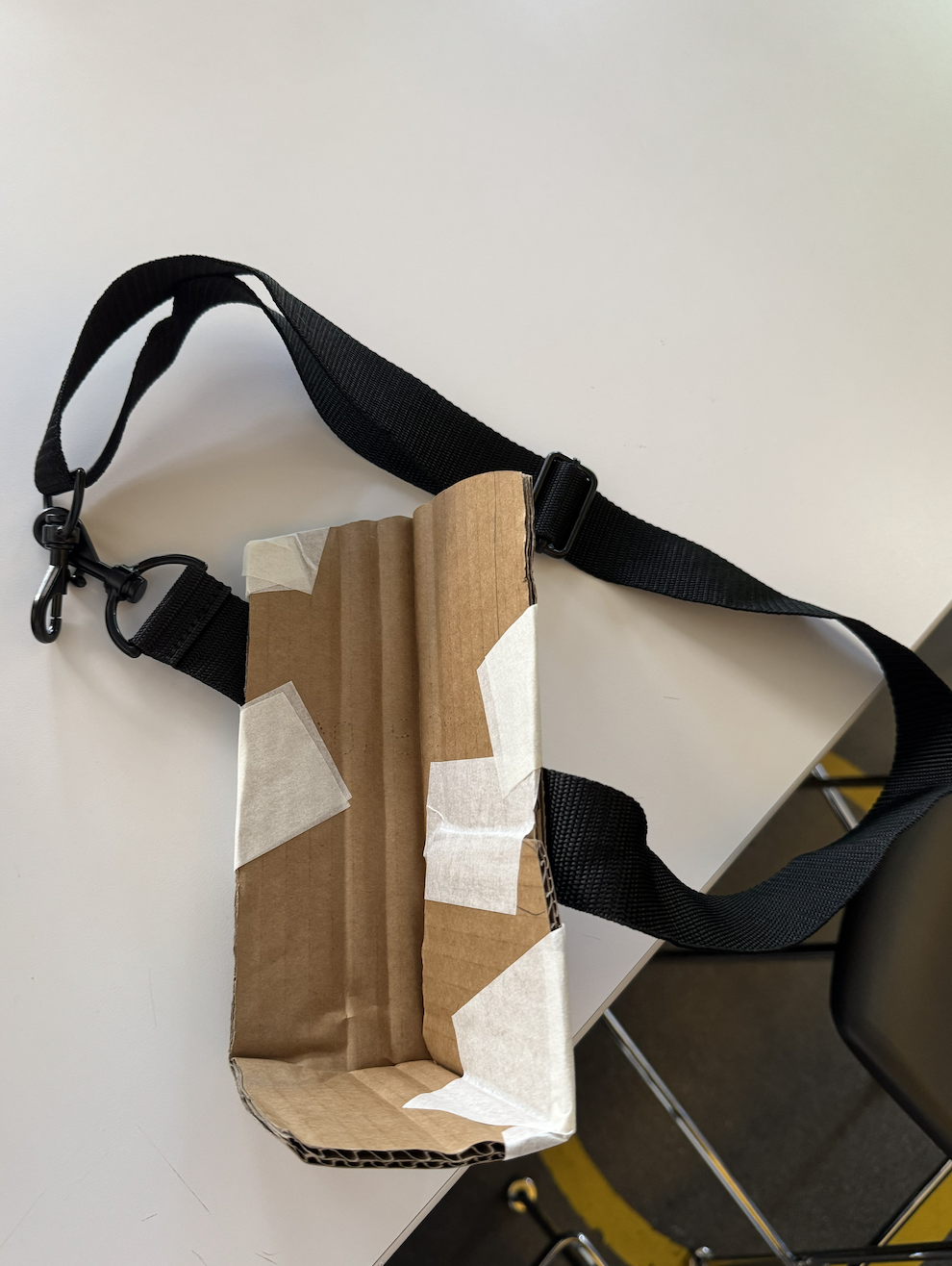
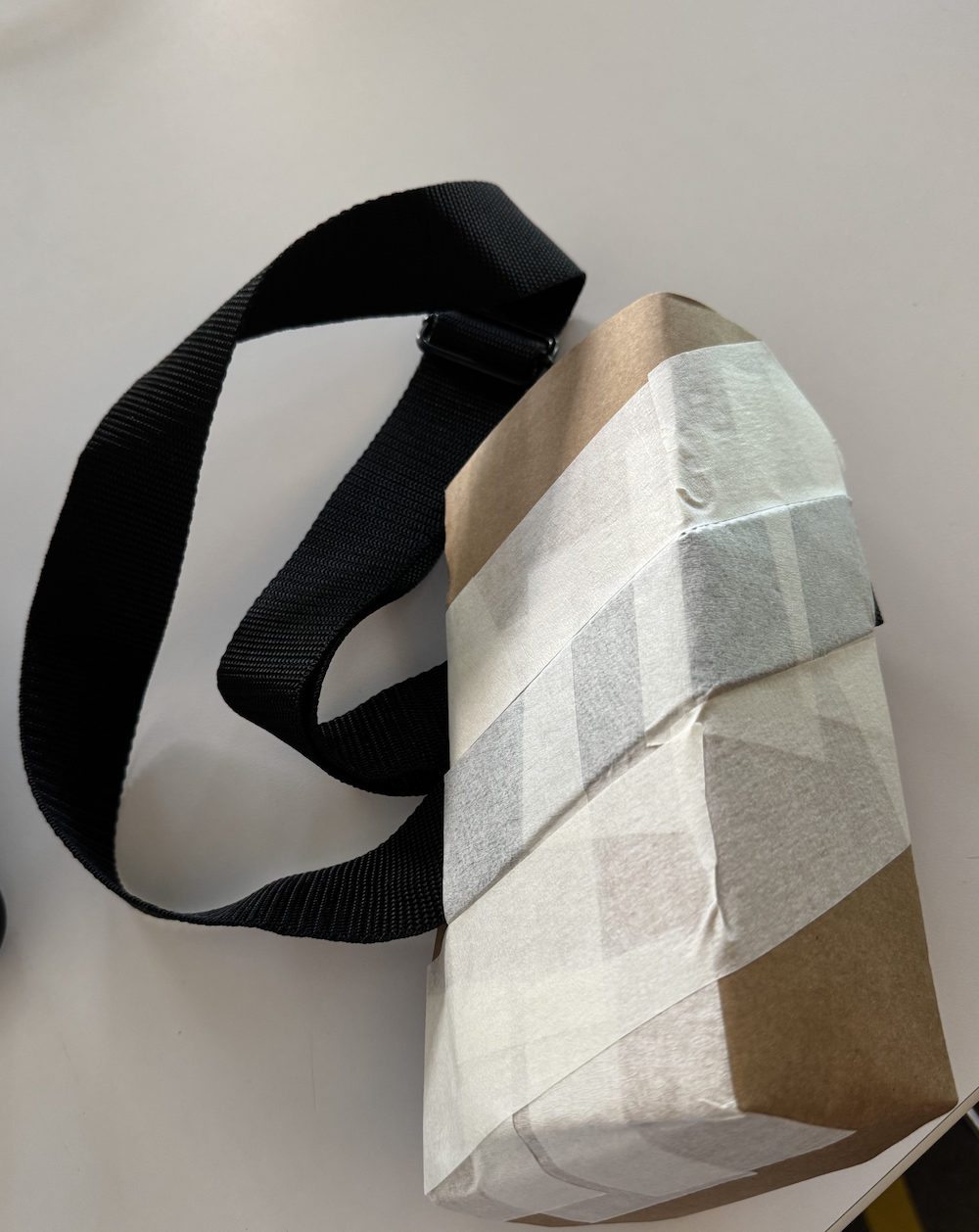
Before the glossy render, the working rig is cardboard, packing tape, a shoulder strap and an elastic forearm cuff — the crudeness is part of the argument. It holds a real phone at eye level and genuinely works when worn.
outcome
Presented to the class as a working worn prototype with full product branding. The room laughed — and then immediately got the point. The absurdity did exactly its job: it made an invisible habit visible enough to argue about.
"everyone laughed, and everyone understood what we were getting at."